
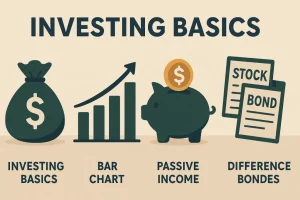
Investing means putting money into assets with the aim of growing wealth over time. It can help beat inflation and build long-term financial security, but it also involves risk. The value of investments can rise and fall, and you may get back less than you put in.
Saving vs investing
Saving is usually best for short-term goals and emergency funds because cash is more stable and accessible. Investing is generally more suitable for longer-term goals, such as retirement, financial independence or building wealth over ten years or more.
Before investing, many people benefit from clearing expensive debt and building an emergency fund. Investing money you may need next month can force you to sell at a bad time.
What can you invest in?
- Shares: Ownership in individual companies.
- Funds: Pooled investments holding many assets.
- Index funds: Funds that track a market index.
- Bonds: Loans to governments or companies.
- Property funds: Investments linked to property assets.
- Multi-asset funds: A mix of shares, bonds and other assets.
Understanding risk
Risk is not only the chance of losing money. It can include volatility, inflation risk, concentration risk, liquidity risk and behavioural risk. Shares can fall sharply in the short term but may offer growth over the long term. Cash feels safe but can lose spending power if inflation is higher than interest.
Your risk level should match your goal, timeframe and emotional comfort. If a fall in value would cause panic selling, your portfolio may be too risky.
Diversification
Diversification means spreading money across different investments. Instead of relying on one company, sector or country, a diversified investor holds a broader mix. This can reduce the impact of one poor performer. Funds and index funds can make diversification easier because one fund may hold hundreds or thousands of investments.
Stocks and Shares ISAs
A Stocks and Shares ISA is a tax-efficient account for eligible UK residents. Investments held inside the ISA can grow without UK income tax or capital gains tax on returns. ISA rules and allowances can change, so always check current limits before contributing.
The ISA wrapper does not remove investment risk. It changes the tax treatment, not the behaviour of the underlying investments.
Active vs passive investing
Active investing uses fund managers or investors who try to outperform the market. Passive investing uses funds designed to track an index. Passive funds often have lower charges, while active funds may aim for better performance but do not guarantee it. Fees matter. A small annual difference in charges can have a large effect over decades.
Good habits for beginners
- Invest for long-term goals, not quick wins.
- Use diversified funds unless you understand individual shares.
- Keep costs low where possible.
- Contribute regularly.
- Avoid panic selling during market falls.
- Review your plan annually, not daily.
Frequently asked questions
Can I lose money investing?
Yes. Investment values can fall, and returns are not guaranteed.
How much money do I need to start?
Many platforms allow small monthly contributions, but you should only invest money you can leave for the long term.
Are index funds good for beginners?
They can be suitable for many beginners because they offer diversification and often low costs, but suitability depends on goals and risk tolerance.
Should I invest before paying off debt?
Expensive debt should usually be prioritised before investing, but personal circumstances vary.
Final thoughts
Investing does not need to be complicated. A clear goal, long timeframe, diversified portfolio and sensible costs can be more effective than chasing short-term opportunities.
Disclaimer: This article is for general information only and does not constitute financial or investment advice. Investments can fall as well as rise, and you may get back less than you invest.