
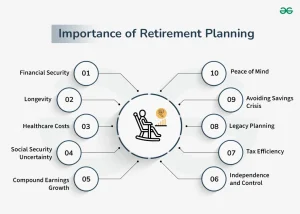
Retirement planning is about building enough income and flexibility for later life. It involves pensions, savings, investments, housing decisions, debt management and understanding what lifestyle you want. The earlier you start, the more time your money has to grow.
Why retirement planning matters
Many people underestimate how long retirement may last. A person retiring in their mid-sixties could need income for twenty, thirty or more years. Planning helps reduce the risk of relying only on the State Pension or making rushed decisions later.
Workplace pensions
Most eligible employees are automatically enrolled into a workplace pension. Contributions are paid by the employee, employer and sometimes supported by tax relief. Workplace pensions can be one of the most valuable retirement tools because employer contributions add to your own savings.
Opting out may increase take-home pay now but can reduce future retirement income. If affordability is difficult, review your budget before giving up employer contributions.
Private pensions
Private pensions, including personal pensions and self-invested personal pensions, can help self-employed people and employees save more. Contributions may receive tax relief subject to rules and limits. Pension money is usually invested, so values can rise and fall. Self-employed workers do not receive automatic employer contributions, so pension planning can be especially important.
State Pension
The State Pension can form part of retirement income, but it may not be enough to support your desired lifestyle on its own. Entitlement depends on National Insurance record and rules in force when you reach State Pension age. Check your State Pension forecast and National Insurance record. Gaps may be fillable in some circumstances, but rules and deadlines can change.
How much do you need to retire?
The amount needed depends on housing costs, lifestyle, health, dependants, travel, debt and whether you continue working part-time. A homeowner with no mortgage may need less income than a renter in an expensive area. A useful starting point is to estimate essential spending, comfortable spending and aspirational spending.
Pension investment risk
Pension funds are usually invested. Younger savers may accept more growth-focused investments because they have time to recover from market falls. People approaching retirement may want to reduce risk or hold more stable assets, depending on how they plan to access the pension.
Accessing pensions
Pension access rules depend on the type of pension and current legislation. Options may include taking tax-free cash, drawdown, annuities or a mix. Each option has tax and risk consequences. Taking too much too soon can create future income problems. Pension scams are also a serious risk.
Common retirement planning mistakes
- Starting too late.
- Opting out of workplace pensions without understanding the loss.
- Assuming the State Pension will cover all costs.
- Ignoring pension charges and investment choices.
- Carrying expensive debt into retirement.
- Taking pension money without considering tax.
Practical retirement planning steps
- Check your workplace and private pension balances.
- Find old pensions from previous employers.
- Check your State Pension forecast.
- Estimate retirement spending.
- Increase contributions if affordable.
- Review investments and charges.
- Seek regulated advice before major pension decisions.
Frequently asked questions
When should I start retirement planning?
As early as possible. Starting early gives contributions more time to grow.
Is the State Pension enough?
For many people, it may not provide the lifestyle they want. Additional pension savings can help.
Should self-employed people use pensions?
Often yes, but the right approach depends on income, tax position and business stability.
Can pensions lose value?
Yes. Pension investments can rise and fall, although they are usually intended for long-term saving.
Final thoughts
Retirement planning rewards consistency. Small contributions made early and reviewed regularly can make a meaningful difference later in life.
Disclaimer: This article is for general information only and does not constitute financial, pension, investment or tax advice. Pension rules can change, and decisions may affect tax and retirement income.