
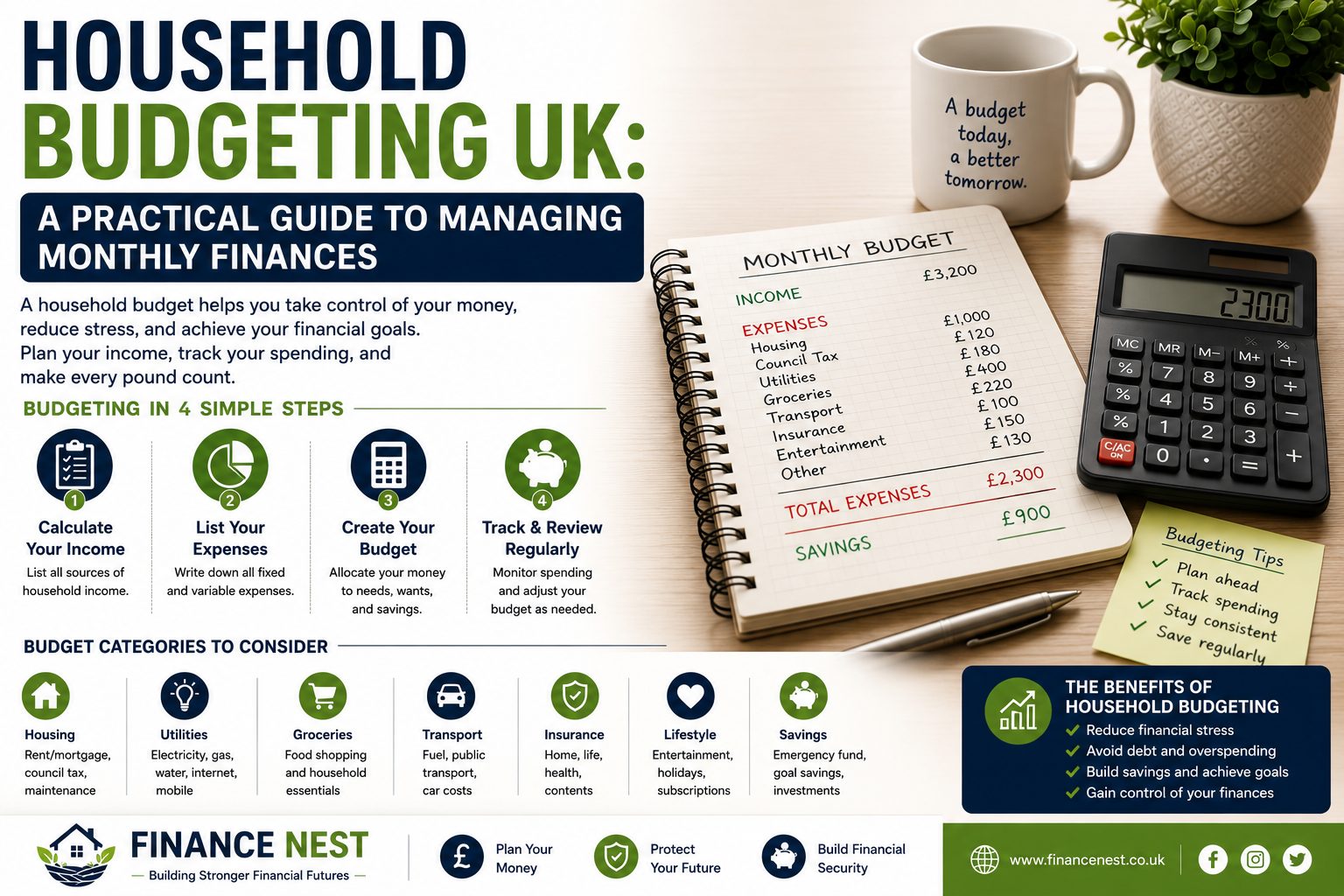
Managing household finances has become increasingly challenging for many UK families. Rising energy costs, food prices, mortgage payments, rent increases, and everyday living expenses can place significant pressure on household budgets.
Despite these challenges, effective budgeting remains one of the most powerful tools for achieving financial stability. A well-planned household budget helps you understand where your money goes, identify unnecessary spending, build savings, reduce debt, and prepare for future financial goals.
Many people associate budgeting with strict restrictions and cutting out all enjoyment. In reality, successful budgeting is about controlling your money rather than allowing your money to control you.
A realistic budget allows you to meet essential expenses, enjoy life responsibly, and work towards long-term financial security.
This guide explains how to create a practical household budget, avoid common mistakes, and build healthy financial habits that support your family’s future.
What Is a Household Budget?
A household budget is a financial plan that tracks income and expenses over a specific period, usually monthly.
It helps answer three important questions:
- How much money is coming in?
- How much money is going out?
- Where can improvements be made?
Without a budget, it is easy to underestimate spending and overestimate available funds.
A household budget provides clarity and control.
Why Budgeting Matters
Many people only start budgeting when financial difficulties arise.
However, budgeting is valuable regardless of income level.
Better Financial Awareness
You gain a clear understanding of spending habits.
Reduced Financial Stress
Knowing where your money is going can reduce uncertainty.
Improved Savings
Budgeting helps identify opportunities to save consistently.
Debt Reduction
You can allocate money towards reducing outstanding balances.
Goal Achievement
Whether saving for a home, holiday, or retirement, budgeting helps turn goals into realistic plans.
Common Reasons Household Budgets Fail
Many budgets fail not because budgeting doesn’t work, but because the approach is unrealistic.
Being Too Restrictive
Budgets that eliminate all discretionary spending often become difficult to maintain.
Allowing reasonable flexibility usually improves long-term success.
Underestimating Expenses
Many people forget irregular costs such as:
- Car maintenance
- School expenses
- Insurance renewals
- Christmas spending
These costs should be included in annual planning.
Not Tracking Spending
A budget only works if spending is monitored regularly.
Ignoring transactions often leads to overspending.
Failing to Review
Financial circumstances change.
Budgets should be updated periodically.
Step 1: Calculate Household Income
Begin by identifying total monthly income.
Examples include:
- Salaries
- Self-employment income
- Child benefit
- Pension income
- Rental income
- Other regular earnings
Focus on net income after tax and deductions.
This provides a realistic starting point.
Step 2: List Essential Expenses
Essential expenses are costs that must be paid to maintain daily life.
Examples include:
Housing Costs
- Mortgage
- Rent
- Service charges
Utilities
- Electricity
- Gas
- Water
- Broadband
Food
- Groceries
- Essential household items
Transport
- Fuel
- Public transport
- Vehicle insurance
Insurance
- Home insurance
- Life insurance
- Income protection
Debt Payments
- Loans
- Credit cards
- Finance agreements
Understanding essential expenses is critical for financial planning.
Step 3: Identify Non-Essential Spending
Discretionary spending includes purchases that are enjoyable but not essential.
Examples:
- Dining out
- Streaming subscriptions
- Entertainment
- Holidays
- Hobbies
- Clothing upgrades
Reducing discretionary spending often creates opportunities for savings without affecting essential living standards.
Step 4: Track Every Pound
Many people are surprised by how much they spend on small purchases.
Common examples include:
- Coffee
- Takeaways
- Convenience shopping
- Subscription services
Tracking spending can reveal patterns that would otherwise go unnoticed.
Methods include:
- Banking apps
- Budget spreadsheets
- Budgeting apps
- Traditional notebooks
The method matters less than consistency.
Understanding Fixed and Variable Expenses
A useful budgeting technique is separating expenses into categories.
Fixed Expenses
These remain relatively stable each month.
Examples:
- Mortgage payments
- Rent
- Insurance premiums
- Broadband contracts
Variable Expenses
These fluctuate over time.
Examples:
- Groceries
- Fuel
- Entertainment
- Clothing
Variable expenses often provide the greatest opportunity for savings.
Popular Budgeting Methods
Different households require different approaches.
The 50/30/20 Rule
This simple framework allocates:
- 50% needs
- 30% wants
- 20% savings and debt reduction
It provides flexibility while maintaining financial discipline.
Zero-Based Budgeting
Every pound of income receives a specific purpose.
Income minus expenses equals zero.
This approach provides detailed control over finances.
Pay Yourself First
Savings are prioritised before discretionary spending.
Many people find this highly effective for building emergency funds.
Budgeting for Families
Family budgeting often involves additional complexity.
Common costs include:
- Childcare
- School uniforms
- Activities
- Family holidays
- Growing food bills
Strategies include:
Shared Financial Goals
Ensure everyone understands priorities.
Meal Planning
Reducing food waste can significantly lower grocery costs.
Bulk Purchasing
Some household items may be cheaper when purchased strategically.
Regular Reviews
Monthly discussions help maintain accountability.
Budgeting During a Cost-of-Living Crisis
Recent economic conditions have increased pressure on many households.
Practical actions may include:
Reviewing Utility Usage
Energy efficiency improvements can reduce bills.
Shopping Around
Compare providers for:
- Insurance
- Broadband
- Mobile contracts
Reducing Unused Subscriptions
Many households pay for services they rarely use.
Prioritising Essential Spending
Focus on necessities before discretionary purchases.
Building Savings into Your Budget
Saving should not be treated as an afterthought.
Include savings as a regular budget category.
Possible savings goals include:
- Emergency fund
- Holiday fund
- House deposit
- Retirement savings
- Children’s future expenses
Automated transfers can improve consistency.
Budgeting and Debt Management
A budget is one of the most effective tools for reducing debt.
Benefits include:
- Clear repayment planning
- Better cash flow management
- Reduced reliance on borrowing
- Improved financial awareness
Many successful debt repayment journeys begin with a realistic budget.
Technology and Budgeting Tools
Modern technology makes budgeting easier than ever.
Popular options include:
Banking Apps
Many banks categorise spending automatically.
Spreadsheet Templates
Ideal for detailed analysis.
Budgeting Apps
Can provide spending alerts and insights.
Savings Apps
Some automate saving based on spending behaviour.
Choose a system that matches your preferences.
Common Budgeting Mistakes
Ignoring Small Purchases
Small expenses accumulate surprisingly quickly.
Not Planning for Annual Costs
Insurance and seasonal spending should be anticipated.
Setting Unrealistic Goals
Extreme budgets often fail.
Failing to Adapt
Budgets should evolve as circumstances change.
Giving Up After a Bad Month
Occasional setbacks do not mean budgeting has failed.
Consistency over time matters most.
Frequently Asked Questions
How often should I review my budget?
Monthly reviews are generally recommended.
What if my income changes each month?
Base your budget on average earnings and maintain a financial buffer where possible.
Should couples have a joint budget?
Many couples benefit from shared planning, although arrangements vary.
How much should I save each month?
The right amount depends on your goals and financial circumstances.
Is budgeting worth it if money is tight?
Yes. Budgeting is often most valuable when finances are under pressure.
Final Thoughts
A household budget is more than a spreadsheet or list of expenses. It is a practical tool that helps you make informed financial decisions, reduce stress, achieve goals, and improve long-term financial security.
The most effective budgets are realistic, flexible, and regularly reviewed. By understanding your income, tracking spending, prioritising essentials, and building savings into your plan, you can take greater control of your finances and create a stronger financial future.
Budgeting does not require perfection. Small improvements made consistently can produce significant results over time.
Disclaimer: This article is for educational purposes only and does not constitute financial advice. Always consider your individual financial circumstances before making financial decisions.