
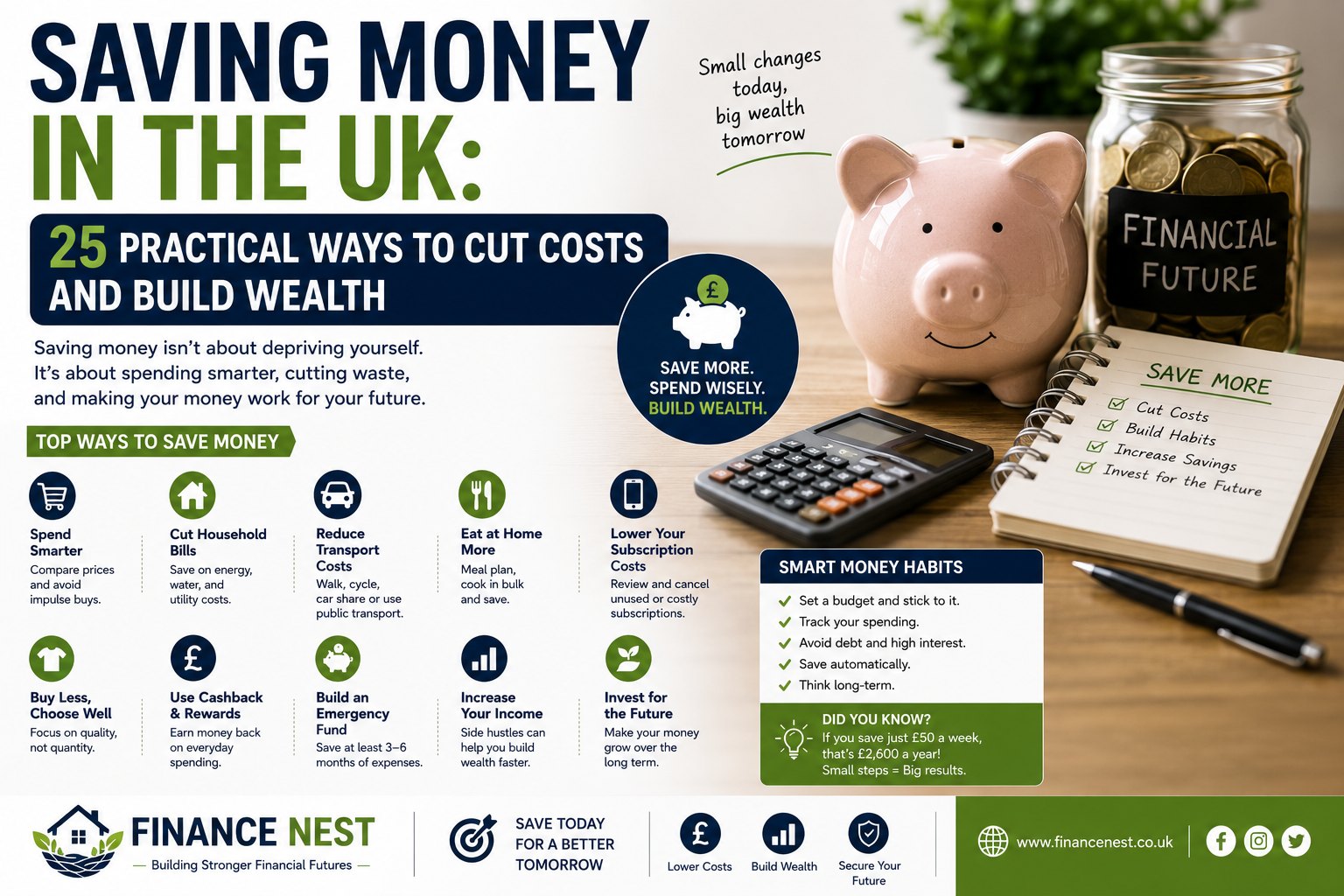
Saving money has become a priority for many households across the UK. Rising energy prices, increasing food costs, higher mortgage rates, and ongoing inflation have placed pressure on family finances, making it more important than ever to manage money effectively.
Many people assume that saving money requires drastic lifestyle changes or a large income. In reality, significant savings often come from small, consistent changes that gradually improve your financial position over time.
Whether your goal is to build an emergency fund, save for a home deposit, reduce debt, or simply improve your monthly cash flow, there are practical steps you can take immediately.
This guide explores 25 effective ways to reduce expenses, increase savings, and strengthen your long-term financial wellbeing.
Why Saving Money Matters
Saving money provides more than financial security.
Benefits include:
- Reduced financial stress
- Greater flexibility
- Protection against emergencies
- Less reliance on borrowing
- Improved financial confidence
- Progress towards major goals
Many people focus on earning more money, but controlling spending can often have an equally powerful impact.
1. Create a Monthly Budget
A budget is the foundation of successful saving.
Without knowing where your money goes, it becomes difficult to identify opportunities for improvement.
Track:
- Income
- Essential expenses
- Debt payments
- Savings
- Discretionary spending
Even a simple budget can reveal areas where money is being wasted.
2. Review Your Bank Statements
Many households underestimate their monthly spending.
Reviewing recent transactions often highlights:
- Unused subscriptions
- Impulse purchases
- Duplicate services
- Unnecessary fees
Awareness is the first step towards improvement.
3. Build an Emergency Fund
Unexpected expenses can quickly derail financial plans.
An emergency fund helps cover:
- Car repairs
- Boiler breakdowns
- Medical expenses
- Temporary income loss
Even a modest emergency fund can prevent reliance on credit cards and loans.
4. Reduce Energy Consumption
Energy bills remain a significant household expense.
Simple measures include:
- Turning off unused appliances
- Using LED lighting
- Lowering thermostat settings
- Improving insulation
- Reducing standby power usage
Small changes can add up over time.
5. Compare Utility Providers
Many consumers remain with the same providers for years.
Regularly compare:
- Gas
- Electricity
- Broadband
- Mobile contracts
Switching providers may reduce monthly costs.
6. Plan Meals in Advance
Food spending often represents a large portion of household budgets.
Meal planning helps:
- Reduce waste
- Avoid unnecessary purchases
- Limit takeaway spending
- Improve grocery budgeting
A shopping list can also reduce impulse buying.
7. Buy Generic Brands
Many supermarket own-brand products offer excellent value.
In some cases, the difference in quality is minimal while the savings can be substantial.
Consider comparing:
- Household products
- Pantry items
- Cleaning supplies
- Personal care products
8. Reduce Takeaway Spending
Regular takeaway meals can significantly increase monthly expenses.
For example:
£20 takeaway twice weekly
= Over £2,000 annually
Preparing meals at home more frequently can create meaningful savings.
9. Review Insurance Policies
Insurance premiums often increase at renewal.
Compare quotes for:
- Car insurance
- Home insurance
- Life insurance
- Travel insurance
Loyalty does not always result in the best price.
10. Cancel Unused Subscriptions
Subscription services can quietly consume hundreds of pounds each year.
Review:
- Streaming services
- Gym memberships
- Software subscriptions
- Online memberships
Keep only those that provide genuine value.
11. Avoid Impulse Purchases
Many unnecessary purchases occur due to emotional or impulsive spending.
Before buying:
Ask yourself:
- Do I need this?
- Can I afford it?
- Will I still want it next week?
Introducing a waiting period can reduce unnecessary spending.
12. Use Cashback Opportunities
Cashback schemes can provide modest savings on spending you would make anyway.
Examples include:
- Cashback websites
- Bank account rewards
- Retail promotions
However, avoid spending more simply to earn rewards.
13. Reduce Credit Card Interest
High-interest credit card debt can significantly affect finances.
Strategies include:
- Paying more than minimum payments
- Exploring balance transfer options
- Avoiding new borrowing
Reducing interest costs frees money for savings.
14. Shop Second-Hand
Many quality items can be purchased second-hand.
Examples:
- Furniture
- Children’s items
- Sports equipment
- Electronics
Buying pre-owned often reduces costs dramatically.
15. Use Public Transport Where Practical
Vehicle ownership can be expensive.
Costs include:
- Fuel
- Insurance
- Tax
- Maintenance
- Parking
Public transport may reduce costs in some situations.
16. Negotiate Bills
Many consumers never negotiate.
Some providers may offer discounts or incentives to retain customers.
It costs little to ask.
17. Set Savings Goals
Specific goals often improve motivation.
Examples include:
- Emergency fund
- House deposit
- Holiday savings
- Debt reduction
Clear targets make progress easier to measure.
18. Automate Savings
Automation removes the temptation to spend.
Arrange transfers shortly after payday.
Even modest contributions can grow significantly over time.
19. Avoid Lifestyle Inflation
Income increases often lead to increased spending.
Instead of spending every pay rise:
- Save part of the increase
- Reduce debt
- Invest in future goals
This can accelerate financial progress.
20. Review Mobile Phone Contracts
Many consumers overpay for mobile services.
Check:
- Data usage
- Contract terms
- Alternative providers
Switching may reduce monthly costs.
21. Reduce Food Waste
Food waste costs UK households hundreds of pounds annually.
Practical strategies include:
- Proper storage
- Meal planning
- Freezing leftovers
- Checking expiry dates
Small improvements can generate significant savings.
22. Create No-Spend Days
No-spend days encourage awareness and discipline.
During these days:
- Avoid unnecessary purchases
- Use existing resources
- Focus on free activities
They can be surprisingly effective.
23. Earn Additional Income
Saving money and increasing income can work together.
Options may include:
- Freelance work
- Selling unused items
- Overtime opportunities
- Side businesses
Additional earnings can accelerate savings goals.
24. Avoid Payday Loans
Short-term borrowing often carries high costs.
Building savings can reduce the need for emergency borrowing.
Where possible, explore alternatives before considering expensive credit.
25. Make Saving a Habit
The most successful savers focus on consistency rather than perfection.
Small contributions made regularly often outperform ambitious plans that are quickly abandoned.
Building habits creates long-term success.
Common Saving Mistakes
Waiting Until the End of the Month
Many people intend to save what remains.
Often, little remains.
Saving first can be more effective.
Chasing Quick Fixes
Financial improvement usually comes from consistent habits rather than dramatic changes.
Ignoring Small Expenses
Small purchases accumulate surprisingly quickly.
Failing to Set Goals
Without goals, motivation often decreases.
Giving Up After Setbacks
Unexpected expenses happen.
Progress matters more than perfection.
Frequently Asked Questions
How much should I save each month?
This depends on your income, expenses and financial goals.
Is it better to save or pay off debt?
The answer depends on the type of debt and your financial circumstances.
Should I save before investing?
Many financial experts recommend building an emergency fund first.
How long does it take to build savings?
Timescales vary, but consistency is usually more important than speed.
Can small savings really make a difference?
Yes. Small savings repeated over months and years can produce significant results.
Final Thoughts
Saving money does not require extreme sacrifice or a dramatic lifestyle change. Most successful savers build strong habits, manage spending carefully, and focus on gradual improvements over time.
Whether your goal is financial security, debt reduction, home ownership, or retirement planning, the principles remain the same: spend intentionally, save consistently, and review your finances regularly.
Even small changes made today can create a stronger financial future tomorrow.
Disclaimer: This article is for educational purposes only and does not constitute financial advice. Always consider your individual circumstances before making financial decisions.