
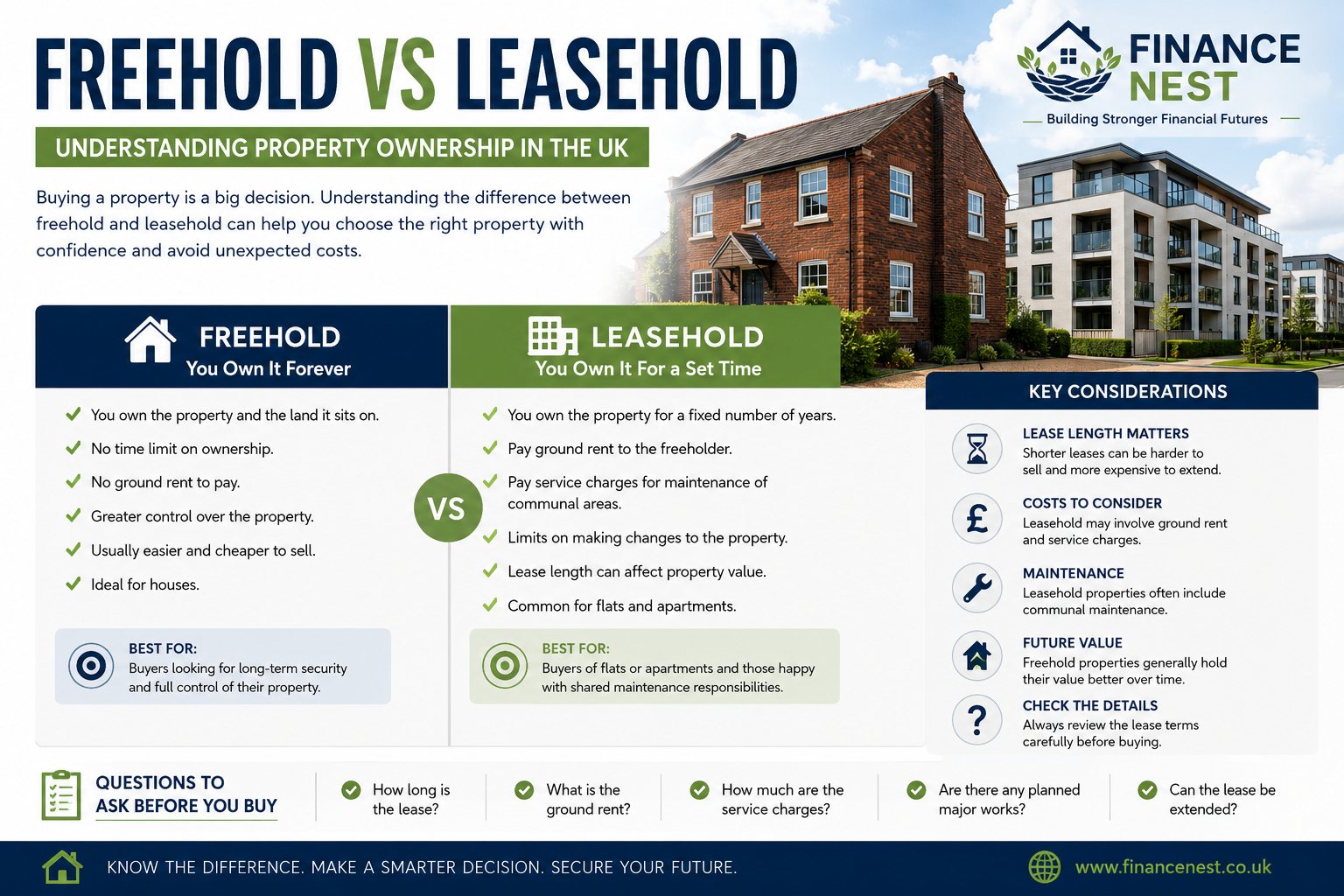
When buying a property in the UK, one of the most important details to understand is whether the property is freehold or leasehold.
Many first-time buyers focus on mortgage rates, deposits, and property prices while overlooking ownership structure. However, the type of ownership can significantly affect your rights, responsibilities, future costs, and even the property’s resale value.
The difference between freehold and leasehold ownership is not always obvious during property viewings. Two properties may look identical, yet one may come with ongoing service charges, ground rent obligations, and lease extension requirements while the other does not.
Understanding these differences before making an offer can help you avoid surprises and make a more informed buying decision.
This guide explains how freehold and leasehold ownership works, the advantages and disadvantages of each, and what questions buyers should ask before proceeding.
What Is Freehold?
Freehold ownership means you own:
- The property
- The land it stands on
For an unlimited period.
There is no time limit attached to your ownership.
You are effectively the outright owner of both the building and the land.
This is often considered the most straightforward form of property ownership.
What Does a Freeholder Own?
A freeholder generally owns:
- The house
- The land beneath it
- Gardens
- Driveways
- Outbuildings within the property’s boundary
As the owner, you are responsible for maintaining and repairing the property.
However, you typically do not need permission from another party to carry out standard maintenance or improvements (subject to planning regulations where applicable).
Advantages of Freehold Ownership
Freehold properties are often preferred by buyers for several reasons.
Complete Ownership
You own the property indefinitely.
There is no lease expiry date to worry about.
No Ground Rent
Freehold owners generally do not pay ground rent.
Greater Control
You usually have more freedom regarding alterations and improvements.
Simpler Resale Process
Freehold properties are often easier for buyers and mortgage lenders to assess.
Long-Term Security
There is no concern about lease length decreasing over time.
Disadvantages of Freehold Ownership
Although freehold ownership offers many advantages, it is not entirely without responsibilities.
Maintenance Costs
You are fully responsible for repairs and maintenance.
Examples include:
- Roof repairs
- Structural issues
- Driveway maintenance
- Boundary repairs
Higher Purchase Prices
In some locations, freehold properties may command higher prices.
No Shared Maintenance Support
Unlike some managed developments, responsibility rests entirely with the owner.
What Is Leasehold?
Leasehold ownership works differently.
When you buy a leasehold property, you purchase the right to occupy the property for a specified period.
The land and building itself remain owned by the freeholder.
The lease acts as a long-term agreement between:
- Leaseholder (you)
- Freeholder (property owner)
How Long Does a Lease Last?
Leases are commonly granted for periods such as:
- 99 years
- 125 years
- 250 years
- 999 years
Each year that passes reduces the remaining lease length.
This is why lease length is an important consideration when buying.
Why Are Flats Often Leasehold?
Many flats are leasehold because:
- Multiple owners share one building
- Communal areas require management
- Shared maintenance responsibilities exist
Leasehold structures help organise:
- Building maintenance
- Insurance
- Shared facilities
In many apartment developments, leasehold ownership remains common.
What Is Ground Rent?
Ground rent is a payment some leaseholders make to the freeholder.
Historically, ground rent was often relatively small.
However, some older leases contained escalating ground rent clauses that became controversial.
Modern regulations have changed how ground rent works for many new leases.
Buyers should always review:
- Current ground rent
- Future increases
- Lease terms
What Are Service Charges?
Service charges are separate from ground rent.
These charges help fund:
- Building maintenance
- Cleaning
- Landscaping
- Communal lighting
- Lift maintenance
- Building insurance
Service charges can vary significantly between developments.
Before purchasing, buyers should review:
- Current charges
- Previous years’ charges
- Planned future works
Advantages of Leasehold Ownership
Leasehold properties can still offer many benefits.
Lower Purchase Prices
Leasehold properties may sometimes be cheaper than comparable freehold homes.
Shared Maintenance
Communal maintenance responsibilities are usually managed collectively.
Apartment Ownership
Leasehold structures make flat ownership possible.
Managed Developments
Some buyers appreciate professional building management.
Disadvantages of Leasehold Ownership
Leasehold ownership involves additional considerations.
Lease Length Reduces Over Time
A shorter lease can affect:
- Property value
- Mortgage availability
- Resale prospects
Ground Rent
Some leases include ground rent obligations.
Service Charges
Charges can increase over time.
Permission Requirements
Some alterations may require freeholder approval.
Lease Extension Costs
Extending a lease can involve legal and financial costs.
Why Lease Length Matters
One of the most important factors when buying a leasehold property is the remaining lease term.
Generally:
Long Leases
Often viewed more favourably by lenders and buyers.
Short Leases
May:
- Reduce property value
- Limit mortgage options
- Increase extension costs
Many buyers investigate lease length before making an offer.
What Is a Lease Extension?
A lease extension increases the remaining lease term.
Benefits may include:
- Improved resale value
- Better mortgage options
- Greater buyer appeal
However, lease extensions can involve:
- Valuation fees
- Legal fees
- Extension costs
Buyers should understand extension requirements before purchasing.
Freehold vs Leasehold: Key Differences
| Feature | Freehold | Leasehold |
|---|---|---|
| Ownership Duration | Unlimited | Fixed term |
| Own Land | Yes | No |
| Ground Rent | Usually No | Sometimes |
| Service Charges | Usually No | Often Yes |
| Lease Extension Needed | No | Possibly |
| Property Control | Greater | More Restrictions |
| Common Property Type | Houses | Flats |
Questions to Ask Before Buying Leasehold
Always ask:
How Many Years Remain on the Lease?
Lease length can affect value and lending.
What Is the Ground Rent?
Review current costs and future increases.
What Are the Service Charges?
Understand ongoing obligations.
Are Major Works Planned?
Future repairs may increase costs.
What Restrictions Apply?
Check rules regarding pets, subletting, and alterations.
Mortgage Considerations
Lenders often review leasehold properties carefully.
Factors considered may include:
- Remaining lease length
- Service charges
- Ground rent arrangements
- Building management
Short leases can sometimes make mortgage approval more difficult.
Freehold vs Leasehold: Which Is Better?
The answer depends on your circumstances.
Freehold may suit buyers who want:
- Full ownership
- Greater control
- No lease concerns
Leasehold may suit buyers seeking:
- Flats
- City-centre properties
- Managed developments
Neither is automatically better.
The key is understanding the obligations attached to the property.
Common Myths
Myth: Leasehold Means You Don’t Own the Property
False.
You own the leasehold interest for the lease term.
Myth: All Leaseholds Are Bad
False.
Many leasehold properties provide excellent homes and investments.
Myth: Freehold Properties Have No Costs
False.
Freehold owners remain responsible for maintenance and repairs.
Myth: Ground Rent and Service Charges Are the Same
False.
They are separate obligations.
Frequently Asked Questions
Is freehold better than leasehold?
Not necessarily. The best option depends on your circumstances and the property involved.
Can a lease be extended?
Yes, subject to legal requirements and costs.
Do all leaseholds have ground rent?
Not always. Terms vary between leases.
Are flats usually leasehold?
Many flats are leasehold, although ownership structures vary.
Can service charges increase?
Yes. Costs may change depending on maintenance and management requirements.
Final Thoughts
Understanding the difference between freehold and leasehold ownership is essential when purchasing property in the UK.
While freehold ownership offers greater control and simplicity, leasehold properties can still provide excellent opportunities, particularly for apartment buyers and those seeking managed developments.
Before making an offer, carefully review lease terms, service charges, ground rent obligations, and lease length. The more information you have, the more confident you can be in your purchasing decision.
A property purchase is a major financial commitment, and understanding ownership structure is one of the most important steps towards making a well-informed investment.
Disclaimer: This article is for educational purposes only and does not constitute legal, mortgage, property, or financial advice. Always seek professional advice appropriate to your circumstances.