
Ask most people why they struggle with money, and you’ll often hear the same response:
“I don’t know where my money goes each month.”
This is exactly where budgeting can help.
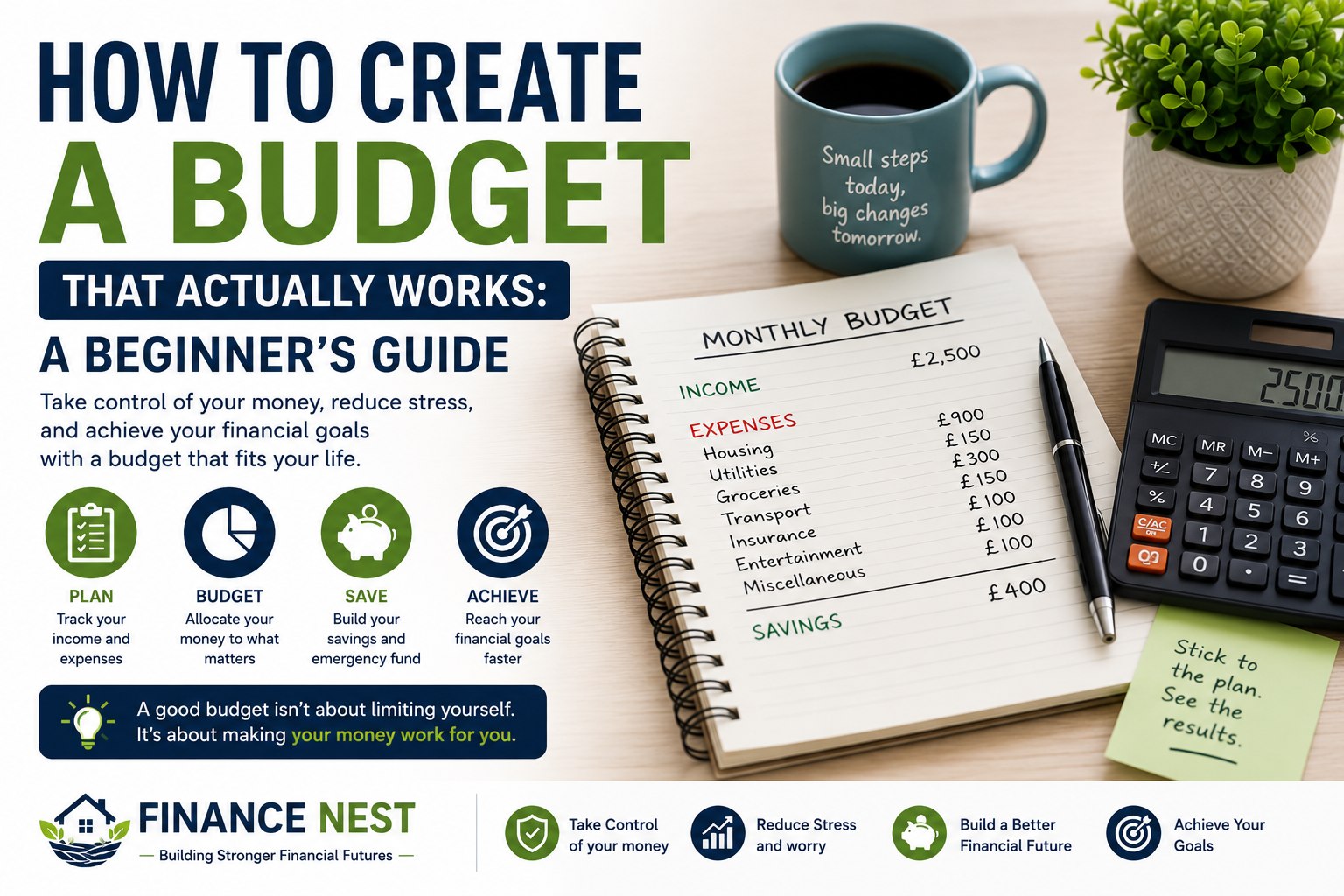
Despite what many people think, budgeting is not about depriving yourself of everything you enjoy. It is not about living on the bare minimum or tracking every penny with military precision. Instead, a budget is simply a plan for your money.
A good budget helps you:
- Understand your spending habits
- Avoid running out of money before payday
- Build savings
- Reduce debt
- Achieve financial goals
- Feel more in control of your finances
The problem is that many budgets fail because they are unrealistic. People often create strict plans that look good on paper but are impossible to maintain in real life.
The goal is not to create a perfect budget.
The goal is to create a budget that actually works for your lifestyle.
What Is a Budget?
A budget is a financial plan that outlines:
- How much money you earn
- How much money you spend
- Where your money goes
- How much you save
Think of a budget as a roadmap.
Without a roadmap, it’s easy to get lost financially.
With a budget, every pound has a purpose.
Why Most Budgets Fail
Before creating a successful budget, it’s important to understand why many people give up.
Unrealistic Expectations
Many budgets fail because they cut spending too aggressively.
For example:
- Eliminating all entertainment
- Cutting food spending too far
- Removing every luxury
While this may work for a few weeks, it often becomes unsustainable.
Not Tracking Spending
Creating a budget is only the first step.
Without monitoring spending, it’s impossible to know whether you’re following the plan.
Forgetting Irregular Expenses
Many people budget for monthly bills but forget annual or seasonal expenses such as:
- Car servicing
- Christmas
- School uniforms
- Insurance renewals
- Holidays
These costs eventually appear and disrupt the budget.
Giving Up After One Mistake
A single overspending month does not mean the budget has failed.
Successful budgeting is about consistency, not perfection.
Step 1: Calculate Your Income
The first stage is understanding how much money comes into your household.
Include:
Employment Income
- Salary
- Wages
- Bonuses
Self-Employment Income
- Business earnings
- Freelance income
Benefits
- Child Benefit
- Universal Credit
- Other support payments
Other Sources
- Rental income
- Pension income
- Side hustle earnings
Use your net income after tax and deductions.
This represents the actual money available for spending and saving.
Step 2: Track Your Current Spending
Before creating a budget, understand your current habits.
Review:
- Bank statements
- Credit card statements
- Digital wallet transactions
Look at the previous three months if possible.
Most people discover spending patterns they had not noticed before.
Categorise Your Spending
Divide expenses into categories.
Housing
- Mortgage
- Rent
- Service charges
Utilities
- Gas
- Electricity
- Water
- Broadband
Food
- Groceries
- Household items
Transport
- Fuel
- Public transport
- Vehicle maintenance
Insurance
- Home insurance
- Car insurance
- Life insurance
Entertainment
- Streaming services
- Hobbies
- Social activities
Savings
- Emergency fund
- Investments
- Goal-based savings
Categorising spending makes it easier to identify areas for improvement.
Step 3: Identify Fixed and Variable Expenses
Not all spending behaves the same way.
Fixed Expenses
These remain relatively stable.
Examples:
- Rent
- Mortgage
- Insurance
- Mobile contracts
Variable Expenses
These change from month to month.
Examples:
- Food
- Fuel
- Entertainment
- Clothing
Variable expenses often provide the greatest opportunities for savings.
Step 4: Set Financial Goals
A budget without goals can feel pointless.
Goals provide motivation.
Examples include:
Short-Term Goals
- Save £1,000 emergency fund
- Clear credit card debt
- Pay for a holiday
Medium-Term Goals
- Save for a house deposit
- Buy a vehicle
Long-Term Goals
- Retirement planning
- Investment growth
- Financial independence
The clearer the goal, the easier it becomes to stay committed.
Popular Budgeting Methods
Different approaches suit different personalities.
The 50/30/20 Rule
One of the simplest budgeting methods.
Allocate:
50% Needs
- Housing
- Utilities
- Food
- Transport
30% Wants
- Entertainment
- Dining out
- Hobbies
20% Savings and Debt Repayment
- Emergency fund
- Investments
- Additional debt payments
This method provides flexibility while encouraging financial discipline.
Zero-Based Budgeting
With this method, every pound receives a purpose.
Income minus expenses equals zero.
For example:
Income: £2,500
Expenses:
- Housing: £900
- Food: £300
- Savings: £300
- Transport: £200
- Other categories: £800
Remaining balance: £0
This does not mean spending everything.
It means assigning every pound intentionally.
Pay Yourself First
This approach prioritises savings before discretionary spending.
For example:
- Salary arrives
- Savings transferred automatically
- Remaining money used for expenses
Many successful savers use this strategy.
How to Build a Budget You Can Stick To
Be Realistic
A budget should reflect your actual life.
If you enjoy occasional meals out, include them.
Completely eliminating enjoyable spending often causes budgets to fail.
Include Fun Money
Giving yourself a small discretionary spending allowance can improve long-term success.
Plan for Unexpected Expenses
Life is unpredictable.
Include a small buffer category in your budget.
Review Monthly
Budgets are not static.
Income, expenses and priorities change over time.
Using Technology to Budget
Modern tools make budgeting easier.
Popular options include:
Banking Apps
Many banks categorise spending automatically.
Spreadsheet Templates
Ideal for detailed budgeting.
Budgeting Apps
Can provide insights and spending alerts.
Savings Apps
Help automate saving goals.
Choose a system that you find easy to maintain.
Budgeting as a Couple
Money is one of the most common sources of relationship tension.
Successful couples often:
- Share goals
- Communicate regularly
- Review finances together
- Agree spending priorities
Joint budgeting promotes transparency and teamwork.
Budgeting for Families
Families face unique financial challenges.
Common costs include:
- Childcare
- School expenses
- Activities
- Growing food bills
Family budgets should account for both predictable and unexpected expenses.
Meal planning, bulk purchasing and annual budgeting can be particularly helpful.
Common Budgeting Mistakes
Ignoring Small Purchases
Small daily expenses can become surprisingly expensive over a year.
Not Saving for Emergencies
Without savings, unexpected costs often lead to debt.
Relying on Credit
Using borrowing to fill budget gaps creates long-term problems.
Comparing Yourself to Others
Budgets should reflect your circumstances, not someone else’s lifestyle.
Expecting Instant Results
Financial improvement usually takes time.
Frequently Asked Questions
How much should I save each month?
There is no universal answer. The amount depends on your goals and financial circumstances.
What if my income changes every month?
Base your budget on average income and maintain a financial buffer where possible.
Should I use cash or cards?
Both can work. Choose whichever helps you control spending most effectively.
Is budgeting worth it if I have little money?
Yes. Budgeting is often most valuable when finances are tight.
How often should I review my budget?
Monthly reviews are generally recommended.
Final Thoughts
Creating a budget is one of the most important steps you can take towards financial stability.
A successful budget is not about restricting every aspect of your life. It is about making conscious decisions about where your money goes and ensuring it supports your goals and priorities.
Start simple, be realistic, and focus on progress rather than perfection.
The most effective budgets are not necessarily the most detailed. They are the ones that people consistently follow.
Over time, a well-managed budget can help you reduce stress, build savings, eliminate debt, and create a stronger financial future.
Disclaimer: This article is for educational purposes only and does not constitute financial advice. Always consider your personal circumstances before making financial decisions.