
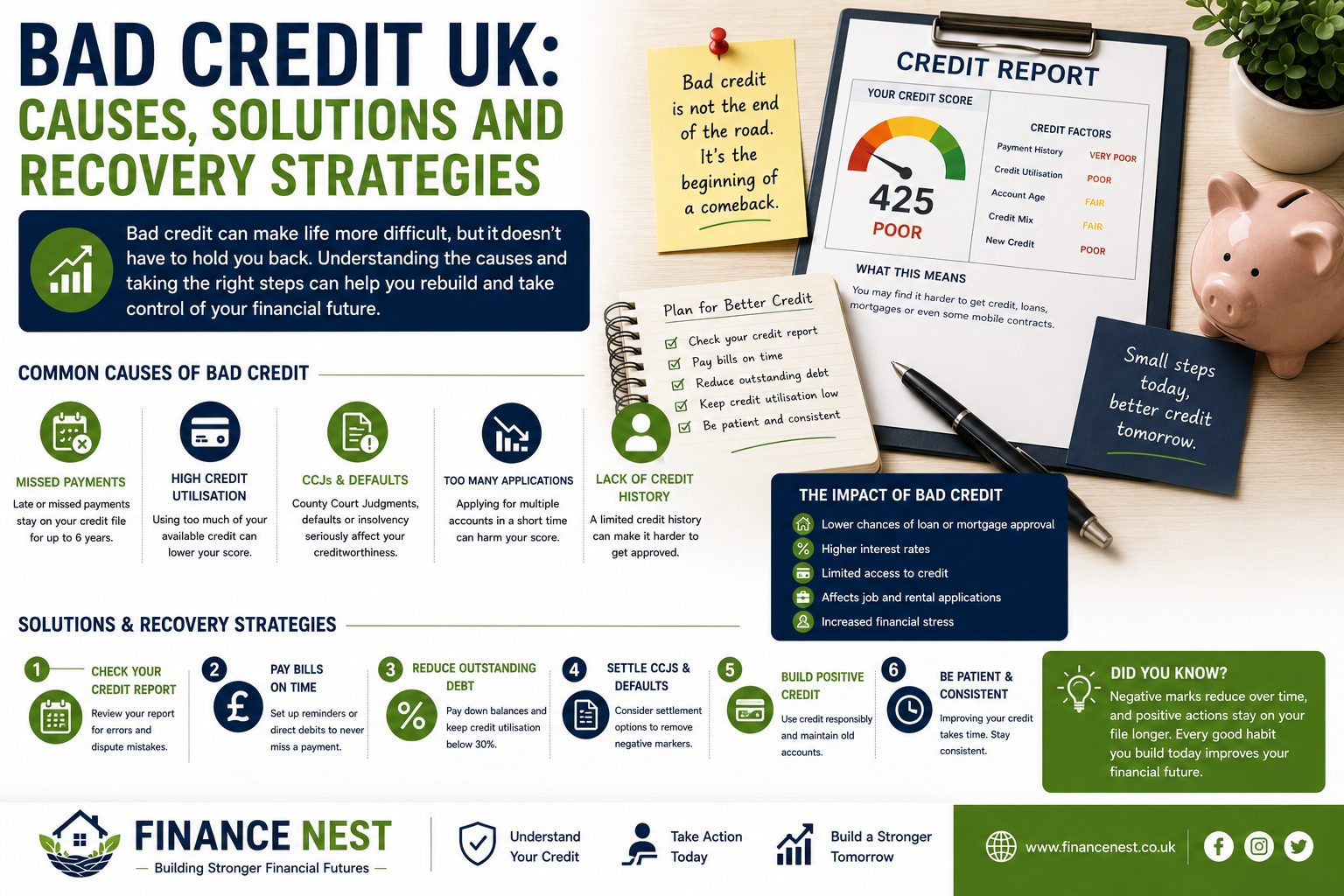
Bad credit is something many people experience at some point in their lives. It can result from missed payments, unexpected financial difficulties, relationship breakdowns, job loss, illness, or simply a lack of understanding about how credit works.
Unfortunately, once your credit profile is damaged, the consequences can extend far beyond borrowing money. A poor credit history may affect mortgage applications, credit card approvals, mobile phone contracts, car finance agreements, and even rental applications.
The encouraging news is that bad credit is not permanent. While rebuilding a damaged credit profile requires patience and commitment, thousands of people improve their financial standing every year by following the right strategies.
This guide explains what bad credit means, what causes it, how lenders view it, and most importantly, what you can do to recover.
What Does Bad Credit Mean?
Bad credit generally refers to a credit history that suggests higher lending risk.
There is no official UK definition of bad credit.
Instead, lenders review information such as:
- Missed payments
- Defaults
- County Court Judgments (CCJs)
- Debt management plans
- Bankruptcies
- Individual Voluntary Arrangements (IVAs)
- High credit utilisation
- Frequent credit applications
The more negative indicators present, the more difficult it may become to obtain new credit.
How Credit Problems Begin
Most people do not intentionally develop bad credit.
Financial difficulties often develop gradually.
Common causes include:
Unexpected Job Loss
A sudden reduction in income can make existing commitments difficult to maintain.
Illness or Injury
Health problems can affect both earnings and expenses.
Relationship Breakdown
Divorce or separation frequently creates financial challenges.
Rising Living Costs
Inflation and increased household expenses can put pressure on budgets.
Poor Financial Planning
Living beyond available means often leads to growing debt.
Lack of Emergency Savings
Without savings, unexpected expenses may result in missed payments.
Bad credit is often a symptom of wider financial pressures rather than irresponsible behaviour.
Common Signs of Bad Credit
Several warning signs may indicate credit problems.
Missed Payments
Even occasional missed payments can appear on credit reports.
Persistent Credit Card Debt
Maintaining high balances for long periods may concern lenders.
Regular Use of Overdrafts
Dependence on overdrafts can suggest financial pressure.
Loan Rejections
Repeated credit refusals may indicate credit profile issues.
Debt Collection Activity
Accounts passed to collection agencies often reflect serious repayment problems.
Recognising these warning signs early allows corrective action before problems escalate.
How Lenders View Bad Credit
Lenders assess risk.
When reviewing an application, they consider whether a borrower is likely to repay according to agreed terms.
Bad credit may suggest:
- Previous financial difficulties
- Increased repayment risk
- Potential affordability concerns
However, lenders rarely make decisions based on one factor alone.
They may also review:
- Current income
- Employment status
- Existing debts
- Deposit size
- Recent payment history
- Stability of finances
This means some applicants with historic credit problems may still qualify for borrowing.
Different Types of Bad Credit
Not all negative credit events carry the same weight.
Missed Payments
Usually among the least severe issues if isolated and resolved quickly.
Defaults
More serious because they indicate an account has broken down.
CCJs
Court judgments often signal unresolved debt disputes.
Debt Management Plans
May indicate significant financial challenges.
IVAs
Formal debt solutions often remain visible for several years.
Bankruptcy
One of the most serious credit events.
Lenders generally assess severity, age and context when reviewing applications.
The Emotional Impact of Bad Credit
Bad credit affects more than finances.
Many individuals experience:
- Stress
- Anxiety
- Embarrassment
- Reduced confidence
- Relationship pressure
These feelings are understandable.
However, avoiding the problem often makes matters worse.
The most effective approach is to understand the situation and begin taking positive steps.
Can You Recover From Bad Credit?
Absolutely.
Many people successfully rebuild their credit profiles after significant financial difficulties.
Recovery requires:
- Time
- Consistency
- Financial discipline
Improvement rarely happens overnight.
However, every positive action contributes towards rebuilding lender confidence.
Step 1: Understand Your Current Position
Before making improvements, review your credit reports.
Check:
- Experian
- Equifax
- TransUnion
Look for:
- Missed payments
- Defaults
- CCJs
- Incorrect information
- Unknown accounts
Many people discover reporting errors that can be corrected.
Step 2: Create a Realistic Budget
A budget forms the foundation of financial recovery.
List:
Income
- Salary
- Benefits
- Pensions
- Other income
Essential Spending
- Housing
- Utilities
- Food
- Transport
- Insurance
Debt Payments
Include minimum contractual repayments.
A realistic budget helps prevent future missed payments.
Step 3: Prioritise On-Time Payments
Payment history remains one of the most important factors in credit assessments.
Even if previous mistakes exist, consistent payments moving forward can gradually improve your profile.
Consider:
- Direct debits
- Standing orders
- Calendar reminders
Avoiding new missed payments is crucial.
Step 4: Reduce Existing Debt
Lower debt levels often improve financial stability.
Popular repayment approaches include:
Debt Snowball Method
Focus on smallest debts first.
Benefits:
- Quick psychological wins
- Improved motivation
Debt Avalanche Method
Target highest-interest debt first.
Benefits:
- Potentially lower total interest costs
Choose whichever method suits your personality and circumstances.
Step 5: Build Emergency Savings
Many credit problems begin when unexpected expenses arise.
An emergency fund can reduce future reliance on borrowing.
Aim initially for:
- £500
- Then £1,000
- Eventually several months of essential expenses
Small savings can prevent larger financial setbacks.
Step 6: Avoid Excessive Credit Applications
When facing bad credit, many people apply repeatedly hoping for approval.
This can worsen the situation.
Multiple hard searches may:
- Concern lenders
- Reduce approval chances
- Signal financial desperation
Instead:
- Research products carefully
- Use eligibility checkers
- Apply selectively
Step 7: Register on the Electoral Roll
Electoral roll registration helps lenders verify:
- Identity
- Address history
- Stability
This simple step can strengthen applications.
Step 8: Consider Credit Builder Products
Some lenders offer products designed for individuals rebuilding credit.
Examples include:
Credit Builder Credit Cards
Usually lower limits with higher interest rates.
Credit Builder Loans
Structured to demonstrate repayment behaviour.
These products should be used carefully and repaid in full whenever possible.
Bad Credit and Mortgage Applications
Many people assume bad credit automatically prevents home ownership.
This is not always true.
Mortgage lenders typically consider:
Type of Credit Issue
A missed payment differs significantly from bankruptcy.
Age of Problems
Older issues often matter less.
Deposit Size
Larger deposits may improve options.
Current Financial Stability
Recent positive behaviour can help.
Affordability
Income remains important.
Specialist lenders sometimes assist borrowers with historic credit issues.
Mistakes to Avoid
Ignoring Credit Reports
Regular monitoring is essential.
Borrowing More to Solve Debt
Additional borrowing can increase problems.
Missing Payments Again
New missed payments may delay recovery.
Falling for Credit Repair Scams
Be cautious of companies promising guaranteed improvements.
Avoiding Financial Problems
Early action often produces better outcomes.
How Long Does Recovery Take?
The answer depends on:
- Severity of credit issues
- Amount of debt
- Payment behaviour
- Financial circumstances
General timelines:
3–6 Months
Early improvements through budgeting and debt reduction.
6–12 Months
Stronger payment history begins developing.
1–3 Years
Significant profile improvements often become visible.
Several Years
More serious issues gradually become less influential.
Patience is critical.
Frequently Asked Questions
Can bad credit be fixed?
Yes. Many people successfully rebuild their credit profiles through consistent positive financial behaviour.
Will paying off debt instantly improve my score?
Debt repayment helps, but improvement usually occurs gradually.
Can I get a mortgage with bad credit?
Possibly. The outcome depends on your circumstances, lender criteria and the nature of previous credit problems.
Should I close old credit accounts?
Not always. Closing accounts may reduce available credit and increase utilisation.
Do lenders consider explanations?
Some lenders may consider circumstances alongside credit history.
Final Thoughts
Bad credit can feel overwhelming, but it does not define your financial future.
Most credit problems can be improved through consistent action, careful budgeting, responsible borrowing and patience.
Focus on building strong financial habits rather than searching for quick fixes. Pay bills on time, reduce debt where possible, monitor your credit reports and create an emergency fund.
Over time, these actions can strengthen your financial profile, improve lender confidence and create new opportunities for borrowing, home ownership and long-term financial stability.
Disclaimer: This article is for educational purposes only and does not constitute financial, legal or debt advice. If you are struggling with debt, consider seeking help from a qualified debt adviser or recognised debt charity.