
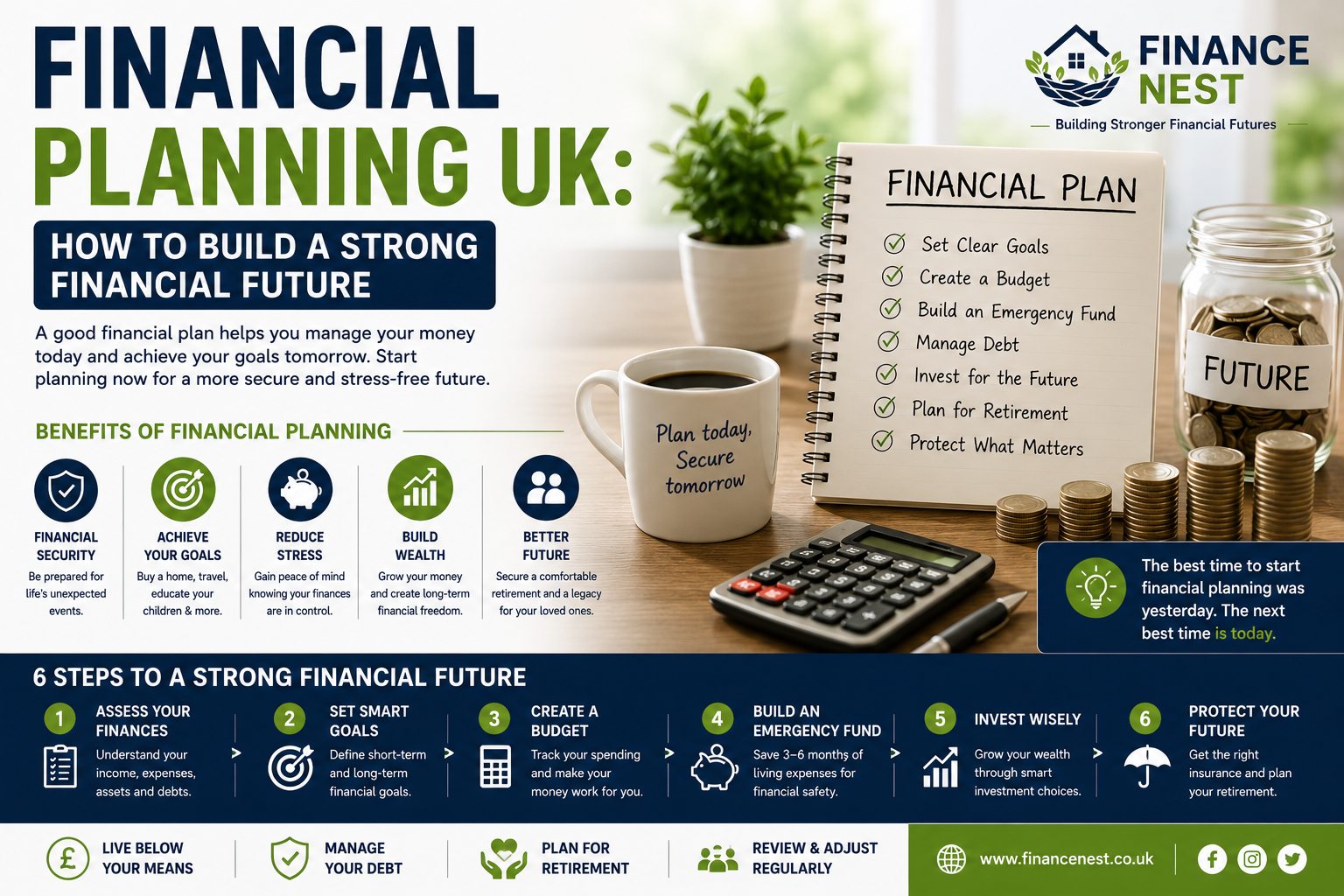
Many people associate financial planning with wealthy individuals, investment portfolios, or retirement strategies. In reality, financial planning is relevant to everyone, regardless of income, age, or financial situation.
Financial planning is simply the process of managing your money in a way that helps you achieve both short-term and long-term goals. Whether you want to buy your first home, clear debt, build savings, start investing, fund your children’s future, or retire comfortably, a financial plan provides direction and structure.
Without a plan, financial decisions are often reactive rather than proactive. People may spend without clear goals, rely on credit during emergencies, or miss opportunities to improve their financial wellbeing.
A strong financial plan helps you understand where you are today, where you want to be in the future, and the steps required to get there.
What Is Financial Planning?
Financial planning is the process of evaluating your current finances and creating a strategy to achieve future objectives.
It involves:
- Managing income
- Controlling spending
- Building savings
- Reducing debt
- Protecting assets
- Investing for the future
- Planning retirement
Rather than focusing on one aspect of money management, financial planning considers your entire financial picture.
Why Financial Planning Matters
Financial planning offers numerous benefits.
Greater Financial Control
Understanding your finances helps you make informed decisions.
Reduced Stress
A clear plan can reduce uncertainty and financial anxiety.
Improved Goal Achievement
Planning increases the likelihood of reaching financial milestones.
Better Protection
Preparation helps reduce the impact of unexpected events.
Long-Term Security
Financial planning supports future stability and independence.
Many people discover that having a plan provides confidence and peace of mind.
Step 1: Assess Your Current Financial Position
Before setting goals, it is important to understand your starting point.
Review:
Income
- Salary
- Self-employment earnings
- Benefits
- Rental income
- Other income sources
Expenses
- Housing
- Utilities
- Food
- Transport
- Insurance
- Entertainment
Savings
- Emergency fund
- Cash savings
- Investments
Debts
- Mortgages
- Loans
- Credit cards
- Finance agreements
A complete picture helps identify strengths and weaknesses.
Step 2: Calculate Your Net Worth
Net worth provides a snapshot of your financial health.
Formula:
Assets – Liabilities = Net Worth
Assets may include:
- Property
- Savings
- Investments
- Vehicles
- Valuable possessions
Liabilities include:
- Mortgages
- Loans
- Credit card balances
- Other debts
Tracking net worth annually can help measure financial progress.
Step 3: Set Clear Financial Goals
Successful financial planning starts with specific goals.
Examples include:
Short-Term Goals
- Build an emergency fund
- Pay off credit card debt
- Save for a holiday
Medium-Term Goals
- Save for a house deposit
- Purchase a vehicle
- Fund education costs
Long-Term Goals
- Retirement planning
- Investment growth
- Wealth preservation
The clearer the goal, the easier it becomes to create a plan.
Step 4: Build a Household Budget
A budget is the foundation of financial planning.
Without a budget, it is difficult to:
- Control spending
- Build savings
- Reduce debt
- Monitor progress
A practical budget should include:
Essential Expenses
- Housing
- Utilities
- Food
- Insurance
Financial Goals
- Savings contributions
- Investment contributions
- Debt repayments
Lifestyle Spending
- Entertainment
- Dining out
- Hobbies
Budgets should be realistic and sustainable.
Step 5: Create an Emergency Fund
Every financial plan should include emergency savings.
Unexpected events may include:
- Job loss
- Medical expenses
- Home repairs
- Vehicle breakdowns
An emergency fund helps prevent financial setbacks from becoming debt problems.
Many financial experts recommend saving three to six months of essential expenses.
Step 6: Manage Debt Effectively
Debt is not always bad.
Mortgages, for example, help many people achieve home ownership.
However, unmanaged debt can undermine financial goals.
Focus on:
High-Interest Debt
Credit cards often carry higher interest rates.
Repayment Strategies
Popular methods include:
- Debt Snowball
- Debt Avalanche
Avoiding Unnecessary Borrowing
Borrow only when necessary and affordable.
Reducing debt often improves financial flexibility.
Step 7: Protect Your Finances
Financial planning is not only about growth.
Protection is equally important.
Insurance
Consider whether you need:
- Home insurance
- Life insurance
- Income protection
- Critical illness cover
Insurance can reduce the financial impact of unexpected events.
Estate Planning
Basic estate planning may include:
- Writing a will
- Reviewing beneficiaries
- Considering inheritance planning
Planning ahead can protect loved ones.
Step 8: Start Investing
Once emergency savings are established and debt is manageable, investing may help build long-term wealth.
Investing involves risk, but historically it has provided opportunities for growth over longer periods.
Common investment options include:
Stocks and Shares ISAs
Tax-efficient investment accounts.
Pensions
Designed for retirement savings.
Investment Funds
Provide diversification across multiple assets.
Index Funds
Popular for long-term investors seeking broad market exposure.
Investments can fall as well as rise, so understanding risk is essential.
Step 9: Plan for Retirement
Retirement planning is one of the most important long-term financial goals.
Questions to consider include:
- When do you want to retire?
- What income will you need?
- What pension provisions exist?
- How much additional saving is required?
The earlier retirement planning begins, the more time investments have to grow.
Understanding the Power of Compound Growth
One of the most valuable concepts in financial planning is compound growth.
Compounding occurs when:
- Investment returns generate further returns
- Savings earn interest on previous interest
Over long periods, compounding can significantly increase wealth.
Time is often more important than attempting to achieve exceptionally high returns.
Financial Planning for Different Life Stages
Young Adults
Priorities may include:
- Building credit history
- Creating emergency savings
- Starting pension contributions
Families
Focus often shifts towards:
- Home ownership
- Childcare costs
- Education planning
- Protection needs
Mid-Career Professionals
Goals may include:
- Mortgage reduction
- Investment growth
- Retirement preparation
Pre-Retirement
Attention often turns towards:
- Pension review
- Debt elimination
- Income planning
Financial planning evolves throughout life.
Common Financial Planning Mistakes
Having No Plan
Many people manage money without defined goals.
Ignoring Retirement
Delaying retirement planning can reduce future options.
Living Beyond Your Means
Persistent overspending undermines financial progress.
Failing to Save for Emergencies
Unexpected costs can derail long-term plans.
Chasing High Returns
Investments should align with risk tolerance and objectives.
Reviewing Your Financial Plan
Financial planning is not a one-time exercise.
Review your plan regularly.
Key times include:
- Annual reviews
- Job changes
- Marriage
- Divorce
- Having children
- Purchasing property
- Approaching retirement
Regular adjustments help keep plans aligned with changing circumstances.
Frequently Asked Questions
Do I need a financial adviser?
Not everyone requires professional advice, but advisers can be valuable for complex situations.
How often should I review my finances?
Many people benefit from reviewing finances monthly and conducting a detailed annual review.
Is financial planning only for wealthy people?
No. Financial planning benefits individuals at all income levels.
What should I prioritise first?
Many people start with budgeting, emergency savings, and debt management.
How much should I save?
The answer depends on your income, goals, and circumstances.
Final Thoughts
Financial planning is not about becoming rich overnight. It is about making informed decisions that improve financial security and help you achieve your goals over time.
By understanding your finances, creating a budget, building savings, managing debt, protecting your family, and planning for the future, you can create a stronger financial foundation and greater peace of mind.
The most successful financial plans are not necessarily complicated. They are consistent, realistic, and regularly reviewed.
Small actions taken today can have a significant impact on your financial future tomorrow.
Disclaimer: This article is for educational purposes only and does not constitute financial, investment, tax, legal, or pension advice. Always consider your individual circumstances and seek professional advice where appropriate.