
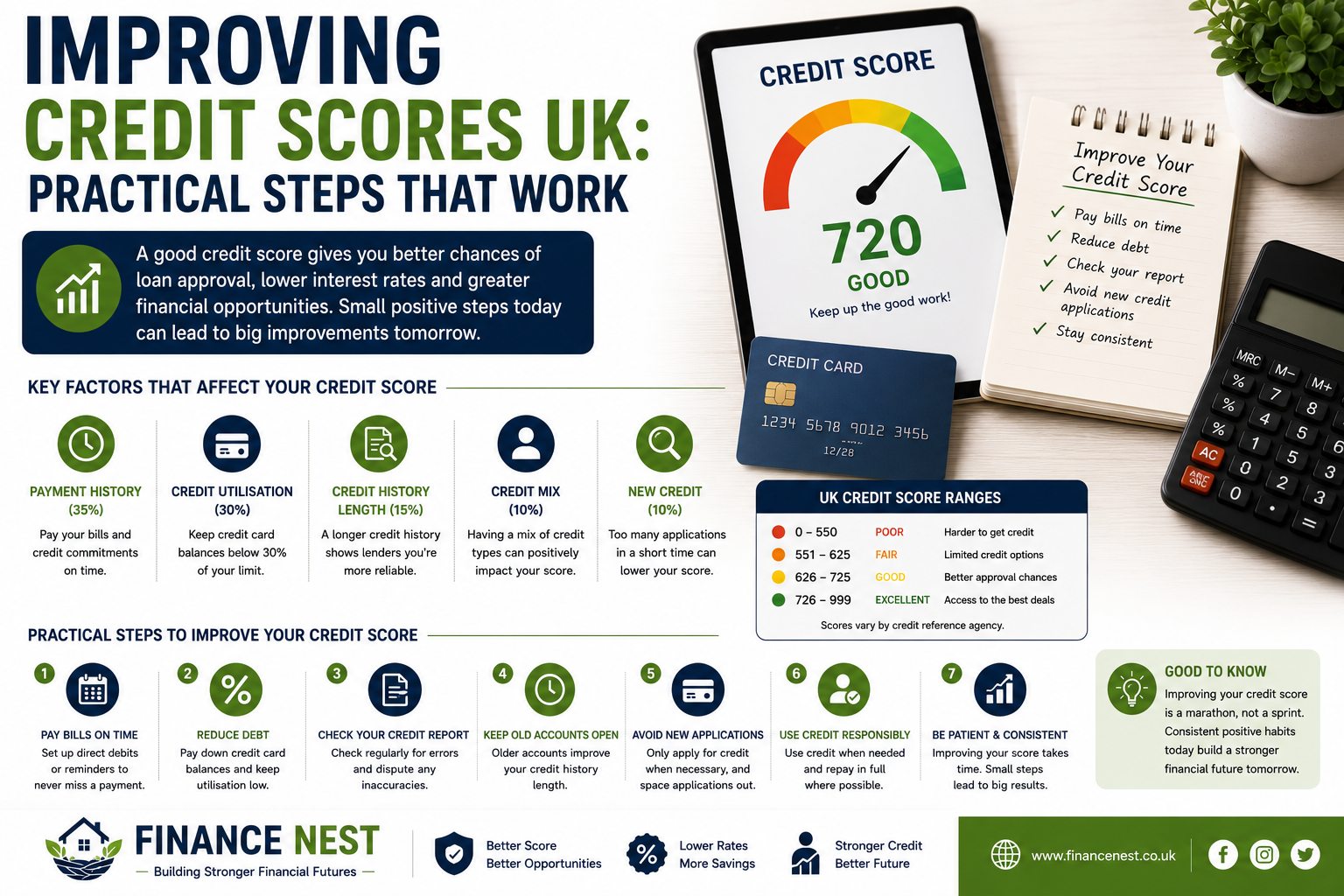
A good credit score can open doors to better financial opportunities. Whether you’re applying for a mortgage, personal loan, credit card, mobile phone contract, or even renting a property, your credit profile often plays an important role in the decision-making process.
Many people believe that improving a credit score is complicated or requires expensive services. In reality, most improvements come from developing consistent financial habits and understanding how lenders assess risk.
The good news is that credit scores are not fixed. Even if your credit history contains mistakes, missed payments, or periods of financial difficulty, there are practical steps you can take to strengthen your profile over time.
This guide explains how credit scores work in the UK, what influences them, and the most effective ways to improve your creditworthiness.
Understanding Credit Scores
A credit score is a numerical representation of information held within your credit report. Credit reference agencies use scoring systems to provide an indication of how lenders might view your financial history.
In the UK, the main credit reference agencies are:
- Experian
- Equifax
- TransUnion
Each agency uses different scoring methods, which means your score may vary between providers.
However, lenders do not simply use these scores. Most lenders combine information from:
- Credit reports
- Application details
- Income
- Existing debts
- Affordability assessments
- Internal lending criteria
This means a high score does not guarantee approval, and a lower score does not automatically mean rejection.
Why Credit Scores Matter
Credit scores can influence:
Mortgage Applications
Mortgage lenders often review credit history carefully because mortgages involve large borrowing commitments.
Credit Cards
Better credit profiles may qualify for more competitive credit card offers.
Personal Loans
Interest rates may vary depending on how lenders assess risk.
Mobile Contracts
Many network providers perform credit checks before offering contracts.
Rental Applications
Some landlords and letting agents conduct credit checks as part of tenant screening.
Improving your credit score can therefore increase financial flexibility and access to products.
Step 1: Check Your Credit Reports
The first step in improving any credit score is understanding your current position.
Many people attempt to improve their score without reviewing their actual credit reports.
Check reports from:
- Experian
- Equifax
- TransUnion
Look for:
- Incorrect addresses
- Duplicate accounts
- Unknown searches
- Incorrect missed payments
- Outdated information
- Fraudulent accounts
Even small errors can sometimes affect lending decisions.
Step 2: Register on the Electoral Roll
Electoral roll registration is one of the simplest improvements available.
Lenders use electoral roll information to:
- Verify identity
- Confirm address history
- Reduce fraud risks
Being registered can strengthen confidence in your application.
If eligible, ensure your registration details match the information used on financial applications.
Step 3: Never Miss Payments
Payment history is often one of the most important factors lenders review.
Missed payments can remain visible for years and may indicate repayment difficulties.
Important accounts include:
- Credit cards
- Loans
- Mortgages
- Mobile contracts
- Utility accounts
Consider:
Direct Debits
Automating payments reduces the risk of forgetting due dates.
Payment Reminders
Use banking apps or calendars to receive notifications.
Emergency Buffer
Maintain sufficient funds to avoid accidental missed payments.
Consistency matters more than perfection.
Step 4: Reduce Credit Utilisation
Credit utilisation measures how much available revolving credit you use.
For example:
Credit limit: £5,000
Balance: £1,000
Utilisation: 20%
Many lenders prefer lower utilisation levels because they suggest less dependence on borrowing.
Ways to reduce utilisation include:
- Paying balances regularly
- Reducing discretionary spending
- Making multiple payments during the month
- Avoiding unnecessary debt accumulation
Step 5: Avoid Too Many Credit Applications
Each credit application can create a hard search on your credit file.
Multiple applications within a short period may signal financial pressure.
Common mistakes include:
- Applying for several credit cards simultaneously
- Comparing loans through full applications
- Repeated rejected applications
Instead:
- Use eligibility checkers
- Compare products carefully
- Apply selectively
Quality matters more than quantity.
Step 6: Maintain Older Accounts
Length of credit history can sometimes contribute to lender assessments.
Long-standing accounts may demonstrate:
- Stability
- Experience managing credit
- Consistent repayment behaviour
Before closing older accounts, consider whether doing so might reduce available credit or shorten visible account history.
However, accounts should only remain open if they can be managed responsibly.
Step 7: Manage Existing Debt Carefully
High debt levels can create concerns for lenders.
Improving your score often involves reducing outstanding balances gradually.
Strategies include:
Debt Snowball Method
Pay smallest balances first.
Debt Avalanche Method
Focus on highest-interest debts first.
Budget-Based Repayment
Allocate fixed monthly amounts towards debt reduction.
Whichever approach you choose, consistency is essential.
Step 8: Build Positive Credit History
Individuals with limited credit history may struggle because lenders have little information to assess.
Building history responsibly may involve:
- Using a credit builder card
- Maintaining low balances
- Paying statements on time
- Avoiding unnecessary borrowing
The goal is not borrowing more.
The goal is demonstrating responsible account management.
Step 9: Monitor Your Credit Regularly
Credit improvement is easier when progress is tracked.
Review reports periodically to:
- Identify errors quickly
- Detect fraud
- Monitor utilisation
- Track improvements
Many consumers only check reports when applying for finance.
Regular monitoring provides better control.
Common Reasons Credit Scores Fall
Understanding common problems helps prevent future issues.
Missed Payments
One of the most damaging factors.
High Credit Utilisation
Heavy reliance on credit may concern lenders.
Defaults
Defaults suggest significant repayment difficulties.
CCJs
County Court Judgments can have substantial impacts.
Frequent Applications
Multiple searches may indicate borrowing pressure.
Fraudulent Activity
Identity theft can damage credit files if not addressed promptly.
How Long Does Credit Improvement Take?
Many consumers expect immediate results.
Unfortunately, meaningful improvements usually take time.
General timelines:
One to Three Months
- Correcting errors
- Reducing utilisation
- Registering on electoral roll
Three to Twelve Months
- Building positive payment history
- Reducing balances
- Improving overall profile
One Year Plus
- Recovering from more significant credit issues
- Demonstrating long-term stability
Patience is often one of the most important ingredients.
Credit Score Myths
Myth: Checking Your Score Hurts It
False.
Checking your own report usually creates a soft search.
Myth: You Need Debt To Have Good Credit
Not necessarily.
Responsible management matters more than borrowing heavily.
Myth: Paying Off Debt Instantly Fixes Everything
Debt reduction helps, but other factors also influence credit assessments.
Myth: Credit Repair Companies Can Remove Accurate Information
Generally false.
Accurate information typically remains until reporting periods expire.
Preparing for a Mortgage
If you plan to apply for a mortgage within the next year:
Review All Credit Reports
Ensure information is accurate.
Reduce Credit Card Balances
Lower utilisation can improve lender perception.
Avoid New Borrowing
Minimise unnecessary applications.
Maintain Stable Finances
Consistent income and spending patterns can help.
Mortgage preparation should ideally begin several months before applying.
Frequently Asked Questions
What is considered a good credit score?
This varies between credit reference agencies and lenders.
Can I improve my score quickly?
Some improvements may appear within months, but significant improvements often take longer.
Should I close unused credit cards?
Not always. Closing accounts can reduce available credit and increase utilisation.
Do utility bills affect credit scores?
Some providers report payment information, which can contribute to your credit profile.
How often should I check my credit report?
Reviewing reports several times per year is a sensible habit.
Final Thoughts
Improving your credit score is rarely about finding a secret shortcut. Most successful improvements come from building strong financial habits and maintaining them consistently.
Registering on the electoral roll, making payments on time, reducing credit utilisation, checking reports for errors, and avoiding excessive borrowing are among the most effective strategies available.
Although progress may take time, small positive actions repeated month after month can significantly strengthen your credit profile and improve future borrowing opportunities.
Disclaimer: This article is for educational purposes only and does not constitute financial advice. Lending decisions depend on individual circumstances and lender criteria.