
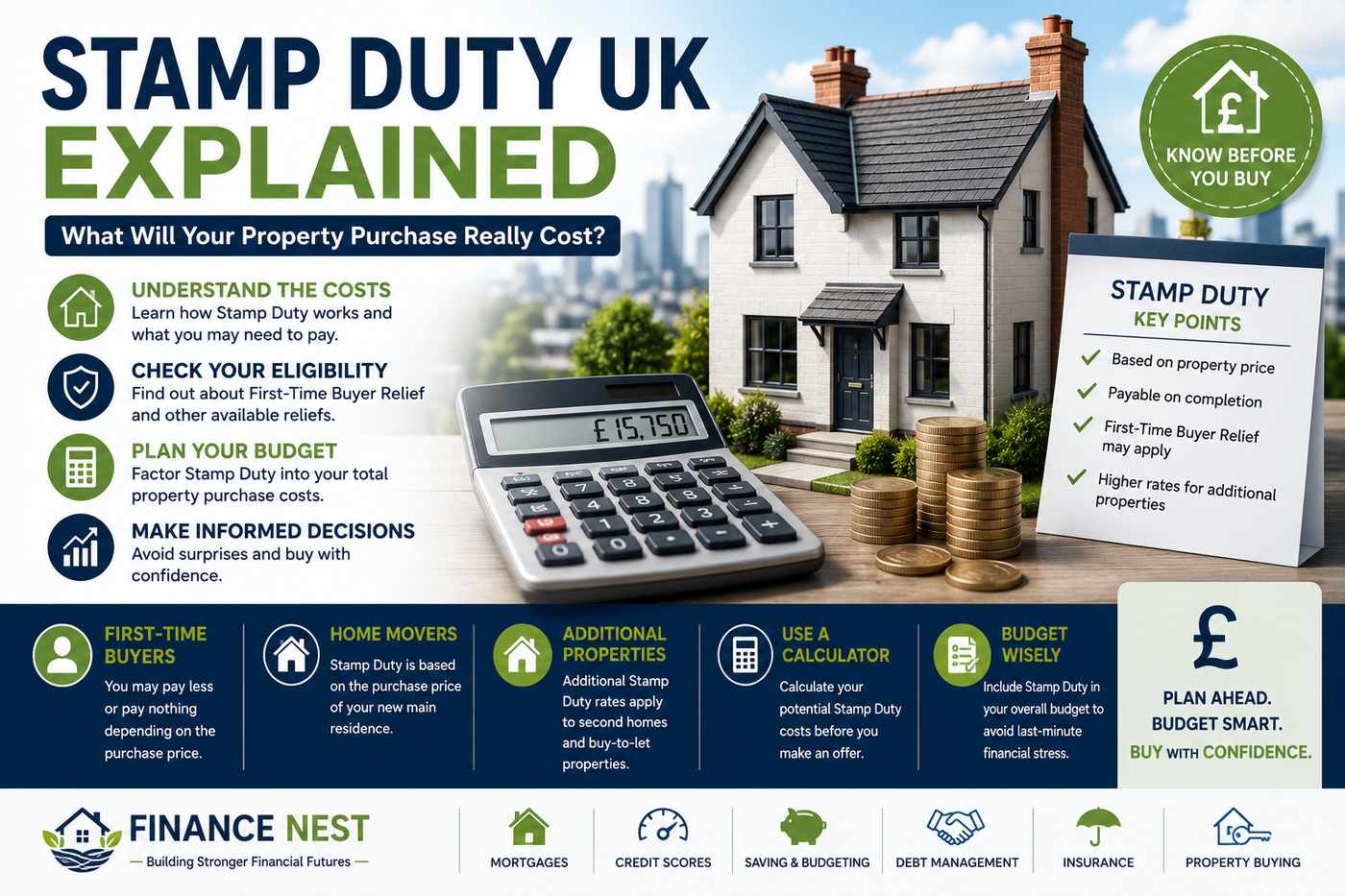
When buying a property in the UK, most buyers focus on the deposit, mortgage payments, solicitor fees, and moving costs. However, one expense that often catches people by surprise is Stamp Duty Land Tax (SDLT).
Stamp Duty can add thousands of pounds to the cost of purchasing a property. Failing to budget for it properly can create financial pressure during what is already an expensive process.
The good news is that not everyone pays the same amount. The tax you pay depends on several factors, including the property’s purchase price, whether you’re a first-time buyer, and whether you’re purchasing an additional property.
Understanding Stamp Duty before making an offer can help you budget accurately, avoid unexpected costs, and make more informed decisions when purchasing property.
This guide explains how Stamp Duty works, who pays it, available reliefs, and practical tips for managing the cost.
What Is Stamp Duty?
Stamp Duty Land Tax (SDLT) is a tax charged on property purchases in England and Northern Ireland.
It applies to:
- Residential property purchases
- Buy-to-let properties
- Additional homes
- Some land purchases
The amount payable depends primarily on:
- Purchase price
- Property type
- Buyer’s circumstances
Stamp Duty is usually paid shortly after completing the property purchase.
Why Does Stamp Duty Exist?
Stamp Duty generates revenue for the government and has existed in various forms for many years.
The tax serves several purposes:
- Generates public revenue
- Influences housing market activity
- Supports government spending
- Creates taxation on property transactions
For buyers, however, it represents an additional cost that must be factored into affordability calculations.
Who Has to Pay Stamp Duty?
Many buyers are liable for Stamp Duty, but the amount varies considerably.
Factors affecting liability include:
Purchase Price
Higher-value properties generally attract higher tax charges.
First-Time Buyer Status
Certain reliefs may reduce or eliminate Stamp Duty.
Additional Property Ownership
Second homes often attract higher rates.
Property Type
Residential and non-residential properties may be taxed differently.
First-Time Buyer Relief
One of the most valuable tax benefits available to new buyers is first-time buyer relief.
The purpose is to help people enter the property market by reducing upfront costs.
To qualify, buyers generally must:
- Be purchasing their first property
- Intend to live in the property
- Meet eligibility requirements
First-time buyer relief can significantly reduce purchase costs and improve affordability.
Stamp Duty on Additional Properties
If you already own a property and purchase another, you may face additional Stamp Duty charges.
This commonly affects:
- Buy-to-let investors
- Holiday home buyers
- Individuals purchasing second homes
Additional property purchases often attract higher tax rates than primary residences.
Because rules can change, buyers should always verify current rates before proceeding.
Buy-to-Let Properties and Stamp Duty
Property investors frequently face higher transaction costs.
When purchasing buy-to-let properties, investors should consider:
- Purchase price
- Additional Stamp Duty charges
- Mortgage costs
- Maintenance expenses
- Rental income projections
Stamp Duty can significantly affect investment returns and should form part of any investment analysis.
Why Buyers Often Forget About Stamp Duty
Many first-time buyers spend months saving for a deposit.
However, they sometimes overlook:
- Solicitor fees
- Survey costs
- Mortgage arrangement fees
- Removal expenses
- Stamp Duty
This can create a funding shortfall just before completion.
A comprehensive budget should account for all purchase-related costs.
How to Budget for Stamp Duty
The best approach is to include Stamp Duty calculations from the beginning of your property search.
Create a purchase budget including:
Deposit
Usually the largest upfront cost.
Legal Fees
Conveyancing and solicitor costs.
Survey Costs
Depending on survey type selected.
Mortgage Fees
Arrangement and valuation costs.
Stamp Duty
Where applicable.
Moving Costs
Removal companies and associated expenses.
Planning early reduces financial surprises later.
Can Stamp Duty Affect Mortgage Affordability?
Indirectly, yes.
Although Stamp Duty is separate from mortgage affordability assessments, it impacts the total funds required to complete a purchase.
For example:
A buyer may have sufficient income for mortgage repayments but insufficient savings to cover:
- Deposit
- Legal fees
- Survey fees
- Stamp Duty
This is why accurate budgeting is essential.
Common Mistakes Buyers Make
Focusing Only on the Deposit
Many buyers underestimate total transaction costs.
Not Checking Eligibility for Relief
First-time buyers may miss opportunities to reduce costs.
Forgetting Additional Property Charges
Investors sometimes underestimate tax obligations.
Relying on Outdated Information
Property tax rules can change.
Always verify current guidance.
Leaving Budgeting Too Late
Financial planning should begin before property viewings start.
How Stamp Duty Influences Property Decisions
Some buyers adjust their property search based on transaction costs.
Examples include:
Choosing a Lower Purchase Price
To reduce overall acquisition costs.
Delaying a Second Property Purchase
To avoid additional charges.
Prioritising First-Time Buyer Opportunities
To maximise available reliefs.
Understanding tax implications helps buyers make informed decisions.
Stamp Duty and Property Investors
Investors should assess:
- Tax costs
- Rental income
- Property appreciation potential
- Financing costs
- Long-term profitability
Stamp Duty is often one of the largest upfront expenses for property investors.
Ignoring it can significantly affect investment returns.
Frequently Asked Questions
Is Stamp Duty paid on every property purchase?
Not necessarily. Liability depends on the property’s value and the buyer’s circumstances.
Do first-time buyers pay Stamp Duty?
Some first-time buyers may qualify for relief, depending on eligibility and current regulations.
When is Stamp Duty paid?
Usually shortly after property completion.
Does Stamp Duty apply to buy-to-let properties?
Yes, and additional charges may apply.
Can Stamp Duty rules change?
Yes. Property tax regulations can be updated by the government.
Final Thoughts
Stamp Duty is one of the most important costs to consider when buying property in the UK. Whether you’re a first-time buyer, home mover, or property investor, understanding how the tax works can help you budget accurately and avoid unpleasant surprises.
Before committing to a purchase, ensure you understand all associated costs, including legal fees, surveys, mortgage charges, and any Stamp Duty obligations.
A well-planned property purchase is far less stressful than one filled with unexpected expenses.
By preparing early and understanding the financial implications, you can approach your property purchase with confidence and clarity.
Disclaimer: This article is for educational purposes only and does not constitute tax, legal, mortgage, or financial advice. Property tax rules may change, and professional advice should always be sought where appropriate.